- Call Us 307-587-3980


Lodge History
A Lodge Born of Legends
Where the Rock Meets the Road
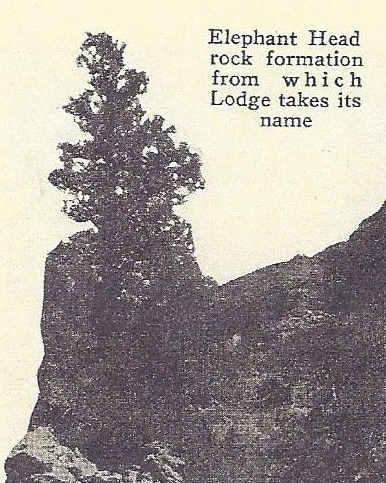
High on the mountainside behind the lodge, an ancient rock formation stares down at the valley below — shaped unmistakably like an elephant's head. It was this formation that gave the lodge its name, and the Cody Road that gave it its purpose.
Situated on the scenic eastern approach to Yellowstone National Park, the lodge sits about an eighth of a mile from the highway, tucked into the Shoshone National Forest. The only marker from the road is the elephant head rock itself, pointing the way just as it has for over a century.
The Thurstons: A Pioneer and a Legend's Niece
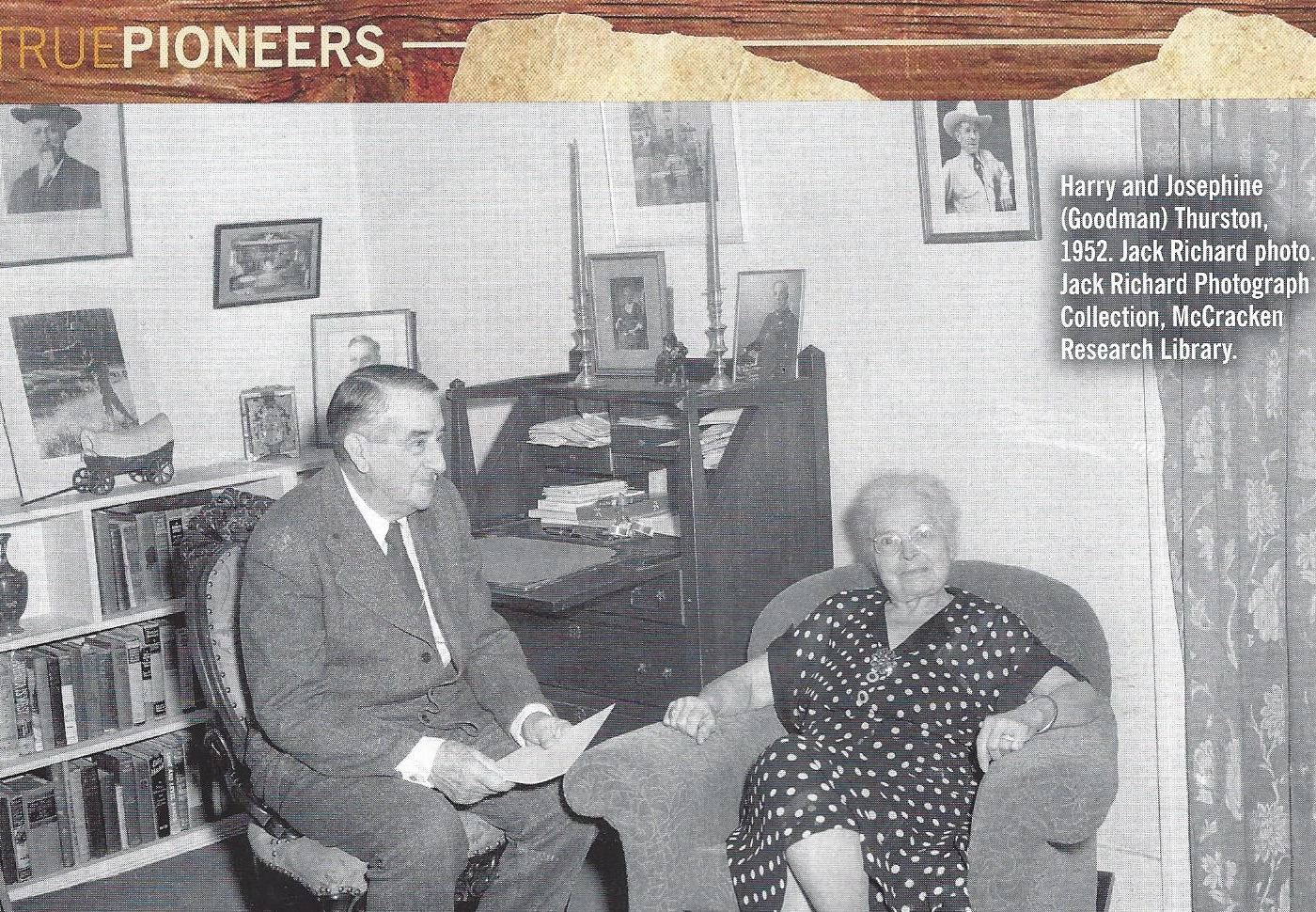
Harry Thurston was born in Newport, Rhode Island in 1874. After studying at the Boston Art School and working as a bank clerk, he came to Wyoming in 1901 planning to stay a year. He fell in love with the land instead.
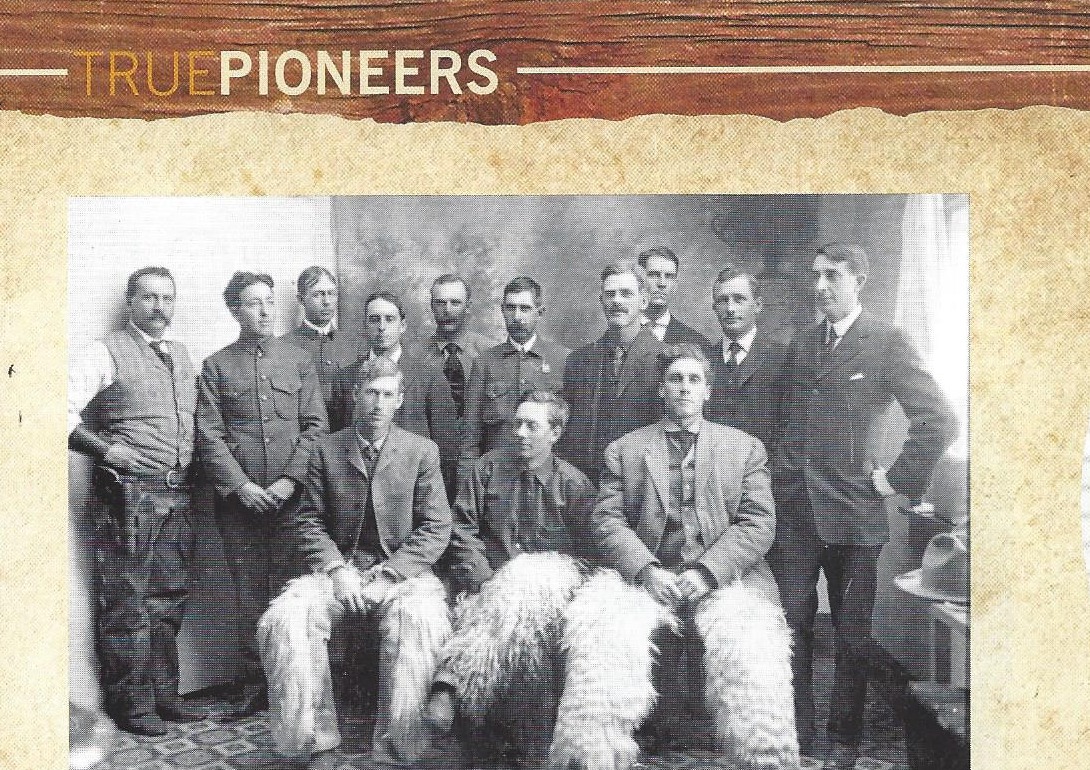
By 1903, Harry had joined the Shoshone National Forest as one of its first rangers. He patrolled and built trails along the North Fork of the Shoshone River, and in the winter of 1904-05, he and Ranger Milt Benedict constructed the Wapiti Ranger Station — the first ranger station ever built in the national forest system.
In June 1906, Harry married Josephine Goodman — the niece of Colonel William F. "Buffalo Bill" Cody himself. Josephine had grown up in the orbit of the most famous showman in the West. Her mother, Julia, was Buffalo Bill's sister and had arrived in Cody in 1902 to manage the legendary Irma Hotel.
"The spell of the forest is a real one. A natural refuge for wildlife and for men who live alone, it has a wonder and gripping charm which defies description in written or spoken words."
— Harry Thurston, reflecting on his years as a rangerFrom Ranger Cabin to Dude Ranch
After serving as forest supervisor, U.S. Commissioner, and even a Ford dealer in Cody, Harry turned his knowledge of the land toward hospitality. On September 13, 1920, the Thurstons received a Shoshone National Forest permit for a "summer home" on the site — and built what is still known today as cabin #6, the "honeymoon cabin."
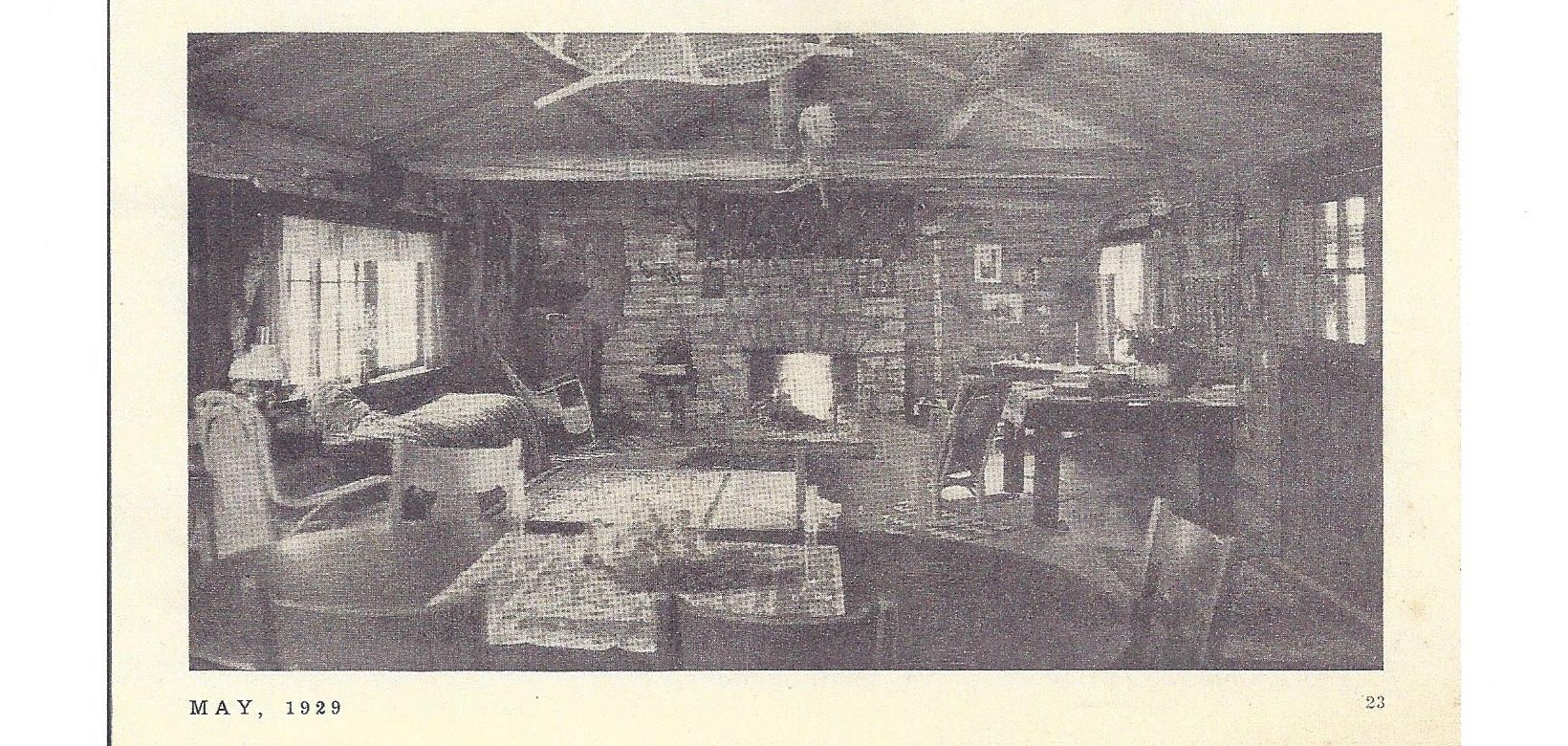
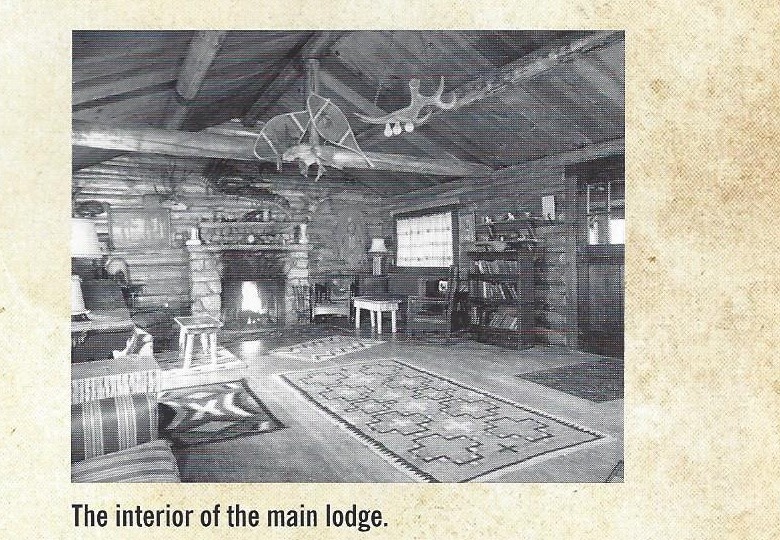
On December 28, 1926, they obtained a full resort permit for slightly less than one acre. By 1927, the main log lodge — with its lounge, dining room, and kitchen — was standing, along with several tent cabins that would later be enclosed into the permanent log guest cabins.
The lodge was deliberately small. Josephine limited accommodations to eighteen or twenty guests at a time, keeping the feeling of "one large family." She bought her own horses and matched each guest with a suitable mount. Horseback riding, pack trips into the mountains, and fishing filled the days. Evenings brought dancing, cards, and games in the log lounge by the stone fireplace.
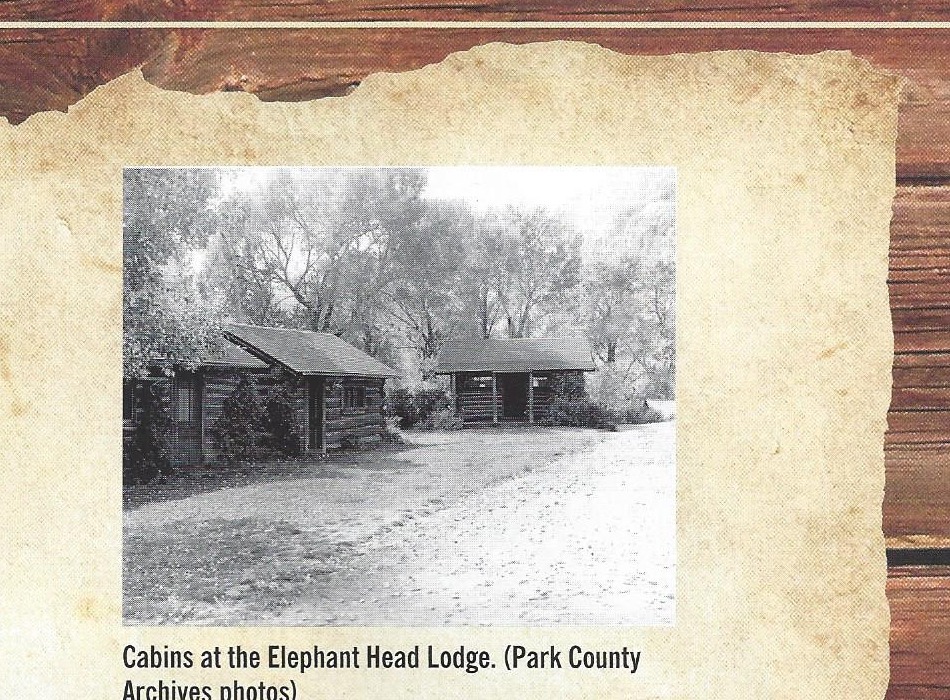
"You are not required to rough it. The visitor must necessarily expect to leave behind the luxuries of civilization but he is not required to 'rough it' although he may have the flavor and surroundings of 'roughing it' with none of the hardships."
— From an early Elephant Head Lodge promotional pamphlet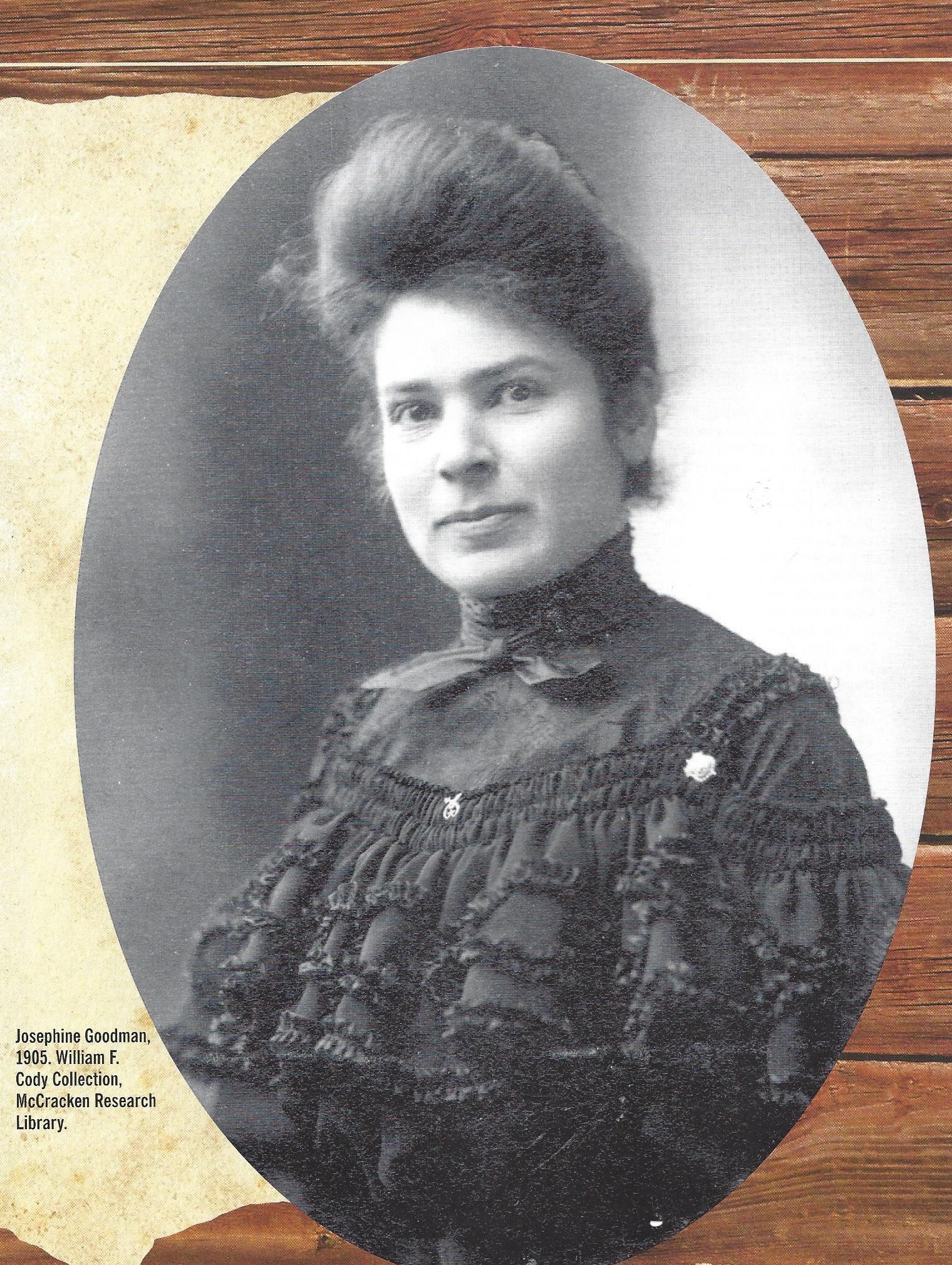
Relics of the Wild West
The first thing guests wanted to see when they arrived at Elephant Head Lodge was the collection of relics of the late Colonel Cody. Buffalo Bill's hat, his guns, Indian bead work and moccasins, keepsakes from the Wild West Shows — all had been in the Cody family since Josephine was a child.
One object everyone enjoyed was a hand-carved saddle. As a special treat, Josephine would sometimes allow guests to ride in it. These weren't museum pieces behind glass — they were personal treasures, and for each relic, Mrs. Thurston had some intimate story to tell.
Josephine's connection to the old West ran deep. Her father had built and managed Colonel Cody's famous Scouts' Rest Ranch in Nebraska. Her mother had managed the Irma Hotel. The lodge on the North Fork was a continuation of a family tradition of Western hospitality stretching back to the frontier itself.
A Century on the North Fork
Harry Arrives in Wyoming
Harry Thurston comes to Wyoming from Rhode Island, planning a one-year visit. He never leaves.
First Forest Ranger
Harry becomes one of the first rangers in the Shoshone National Forest, patrolling the North Fork of the Shoshone River.
A Pioneer Wedding
Harry marries Josephine Goodman — Buffalo Bill's niece. They move to his ranger cabin on Elk Fork.
The First Cabin
The Thurstons receive a forest permit and build the "honeymoon cabin" — still standing today as cabin #6.
The Lodge is Born
A full resort permit is granted on December 28, setting the stage for the main lodge and guest cabins.
Grand Lodge Built
The main lodge, dining room, and tent cabins are completed. Elephant Head Lodge opens its doors to guests.
National Recognition
American Resorts Magazine publishes a feature on the lodge. Rates are $45 per week, including cabin, meals, and a guide.
The Thurstons Pass the Torch
After more than 20 years, the Thurstons sell the lodge for $20,000 to Sam and Vernice Ousten, beginning a new chapter.
Wilderness Homesteads
Joan and Phil Lamb purchase the lodge through Wilderness Homesteads, Inc., ushering in a period of restoration and care.
National Register of Historic Places
Elephant Head Lodge is officially listed on the National Register, recognizing its significance in Wyoming's history.
A Living Legacy
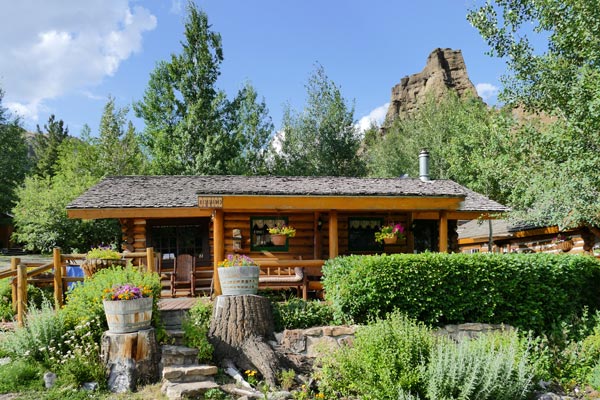
Now owned by Kevin and Debbie Millard, the original lodge, restaurant, and "Trapper" cabin still stand — welcoming a new generation to the North Fork.
Still Standing on the North Fork
More than a century after Harry Thurston first fell in love with Wyoming, and nearly a hundred years since Josephine welcomed the first guests, Elephant Head Lodge endures. The log walls, the stone fireplace, the elephant head rock watching from above — they remain, just as the Thurstons left them.
Listed on the National Register of Historic Places and located on the scenic Cody Road to Yellowstone, the lodge continues the tradition its founders began: a place where the wild beauty of the Shoshone Forest meets genuine Western hospitality.
The days are still beautiful. The evenings are still delightful. And the spell of the forest is still, as Harry wrote, a real one.